Items in cart - View Cart
 Authors






































































































































































































































































































































































































































































































































































































































































































































































































































































































































Keep in touch
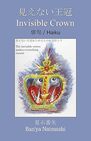
Invisible Crown
 |
|
|||||||||||||||||||||||
When the world tilts on the edge of silence, there lies a crown — not of gold, not of glory — but of absence for haiku. An Invisible Crown weighs nothing, but carries the weight of everything including grief and grief turned to memory, loss and longing, the remnants of a world undone and quietly rebuilt. 5 Haiku Reading from "Invisibble Crown" by Ban'ya Natsuishi https://youtu.be/tB8APRKNxzk
Book Review on Invisible Crown by Ban’ya Natsuishi
From the Romanian literary magazine “Convorbiri literare” Nr. 7 (July 2026) Marius Chelaru Romania In 2007, I wrote—also in „Convorbiri literare”—about another book by Ban’ya Natsuishi (the pen name of Masayuki Inui). To recap briefly, Ban’ya Natsuishi was born in the city of Aioi, Hyogo Prefecture, Japan, and studied at the University of Tokyo, where he earned a master’s degree in comparative literature and culture in 1981. He was a professor at Meiji University from 1992 to 2005. His work is remarkable, including in terms of the number of volumes he has published, but here we will focus on other aspects. In 1998, he co-founded with Sayumi Kamakura the international quarterly haiku journal „Ginyu” (which we review almost every issue in the journal „Poezia”), where he serves as editor-in-chief. He is a co-founder of the World Haiku Association (WHA) and has published various works on haiku (e.g., „Dictionary of Keywords for Contemporary Haiku”, 1990; „A Guide to World Haiku”, 2003; etc.). Since 2005, he has been editing the „World Haiku Association” anthology. For years, he has worked to shape a new vision for haiku, based on his own conception. I have mentioned on other occasions that in a text from the volume „A Future Waterfall”, Ban’ya Natsuishi wrote: “More than three hundred years after Bash?, I am trying to create a different kind of haiku, capturing the traditions and phenomena of the world.” In an interview—which I published years ago in the magazine “Poezia”—he told me: “Haiku is the essence of all poetry. Every haiku must be a verbal nebula that has just generated or constructed a cosmos or universe, generally composed of three verbal pillars that render one another poetically productive.” He is a fervent advocate of the “internationalization” of this poem. In that same conversation, he told me: “Of course, these days Japanese haiku isn’t just haiku.” However, regarding the universality of this type of poem, he told me: “Even among Japanese haiku, some are universal, while others are Japanese, local.” (And even today, there are many who believe that, although they do not explicitly address this issue, nearly all writers in Japan are either opposed to or promoting traditions.) Thus, one of the poetic forms that has been the subject of complex discussions for centuries—first in Japan, where it originated (under various names over time), and then throughout the world wherever there are authors of this genre—is the haiku. The most complicated debate essentially revolves around the question—though not always explicitly stated—of “how far the boundaries (whether substantive, fundamental, or formal) can be ‘stretched, shifted, or diluted’ for this poem to remain a haiku.” What is certain is that, over time, in one form or another, the short poem has undergone various “updates,” starting with its name (it was Masaoka Shiki who called it “haiku”, having been “hokku” until then—that’s what Matsuo Bash? actually wrote), from the Buddhist priest Yamazaki Sokan (1464?–1552), who is said to have composed the first “haiku,” to Ban’ya Natsuishi, right up to the present day, when people speak of the “haiku moment,” “keyword” instead of “seasonal word/kigo” (reportedly introduced by Otsuzi ?suga, 1881–1920, in 1908), “kidai”, “seasonal subject/seasonal theme” (introduced for haiku by Hekigot? Kawahigashi in 1907), and so on. The Invisible Crown illustrates many of the themes Ban'ya Natsuishi explores. In his view, Westerners have been drawn to haiku primarily by its form and evocative power. “Some imitate classical haiku without knowing what it truly means. Haiku is the essence of poetry.” And: “Haiku captures not just one moment, but more than two. Every moment is also a symbol or a metaphor for other moments.” In a century where everything seems to be significant yet devoid of meaning at the same time, “the world of haiku” signifies, in his view, both peace (reflecting peace, tranquility, and good things) and pain (war). In fact, this is what Ban’ya Natsuishi does (also) in this book, through his perspective on what it means to write haiku—in a world where we constantly talk about peace, award peace prizes to political leaders who..., wars continue unabated, the “justifications” are increasingly transparent or hard to accept, international law has become a mere word that too often lacks any real substance, and so on. Thus, the book (according to the preface) contains poems grouped into the following sections: Invisible Crown, My Worn-on Bag, Giant Cocoon, Virus Tsunami, Supernova, Three Drops of Blood, White Powder, The Grace of God, A Path for the Couple, and The Super Blue Moon. Ban’ya Natsuishi addresses various themes facing the world today, ranging from war to pandemics, faith, longing, the disintegration of beautiful things, and the attempt to recreate or rebuild them. In poems written in his characteristic style, through vivid imagery, we read about cities with empty streets and the fragility of our children’s future (“The future of a child: / the golden tail / of a squirrel”). At other times, we encounter surprising images (“The dead man / beside some blue roses / is a smiling poet”; “Is this a war / sprouting / from the winter sea?”; “A torrent of people— / only you and I / invisible”; or “A pear/ like a Buddhist priest/ was once suspended in the air”) or about the fragility of the human being in the face of its own weapons cast into the world: “Man is fragile / distant coronavirus / and close coronavirus” or how that “invisible crown,” which brings neither glory nor wealth (on the contrary: “Inside the body of Death / micro crowns / dance wildly”), covers our heads: “Big cities in lockdown / the invisible crown / on everyone’s head.” Because, in fact, “The invisible crown/ seals/ everyone’s future” but… ultimately, in the world we live in, “Every narrow path / filled with / / invisible crowns.” And so it is that, since we are forbidden from meeting other people, in the “online labyrinth,” everything takes on different dimensions: “Online meeting / sometimes the voices become / musical notes.” In short, we can discuss two aspects: Ban’ya Natsuishi’s vision of haiku in terms of theme and style, as seen in these poems, and his formal choices. From a formal standpoint, while all the Japanese poems in the book are written as a single line, for the English poems (which he co-translated with Eric Selland), he generally chose a three-line structure, and less frequently a two-line one (as, for example: “Honey of terror/ behind that face”). Sometimes there is an explicit caesura, represented in English by a hyphen; in Japanese, this warrants a more extensive discussion). And, of course, the key words and the “haiku moment,” followed by the famous 5-7-5 (or, ultimately, 17 syllables), which, as can be seen from the examples cited, reflects how Ban’ya Natsuishi views it. The same applies to aspects related to punctuation marks. In terms of the moments captured in haiku, Ban’ya Natsuishi’s range is very broad, spanning from the serious themes mentioned above to moments that focus on watermelons (“Watermelon! Watermelon! / Stars and springs/ gush out”), stars, paper, the online world, and stardust (“Stardust/on the palm of my hand/ tastes bitter”). At times, his work brings to mind the famous koans—paradoxes—but this aspect must be approached with caution here. In discussions with various other well-known authors of Japanese-inspired poetry here and abroad, some have concluded that, after all, perhaps this tendency toward “modernization” (though there will always be debate about how far and in what way one can discuss such a thing in a fixed form with certain “established” „rules,” etc.) might actually bring about something positive. After all, there have always been debates, and even today many still disagree with Shiki. In my conversation with Ban’ya—the one I mentioned earlier, as well as on other occasions, and later when I translated a volume of his work and had to search for linguistic equivalents that best captured everything he wanted to convey in the poem—he carefully explained his vision and how he views everything that haiku has meant and continues to mean, both in the past and today. Ban’ya Natsuishi is, above all else, a significant figure in the world of haiku today—a world-renowned author published in dozens of languages who makes remarkable efforts toward the “universalization” and understanding of this poetic form, a man who maintains a consistent direction, both theoretically, in “Ginyu” and other journals, as well as through the way he writes haiku. Navigating between paradox and raw realism, and thematically seeking to address—in his own way—both the classical and the everyday themes of haiku, the major themes and those of the “micro-universe,” the cosmic and the earthly, the human and the insect world, and so on, his poems ultimately and coherently express his vision (which he knows how to explain both theoretically and practically) every time. I have sought to write about this volume—in the style typical of the magazine “Convorbiri literare”—as succinctly as possible, though there is much to say that resonates with his understanding of what haiku means and with his place in the “world of haiku” of yesterday and today. „The Invisible Crown” is yet another volume from which both connoisseurs and any other reader can see exactly what Ban’ya Natsuishi’s universe is like and how he clothes it in the garb of haiku. Ban'ya Natsuishi, Invisible Crown, preface: Karunesh Kumar, bilingual English-Japanese edition, English version: Ban'ya Natsuishi and Eric Selland, Cyberwit.net, Allahabad, India, 2026. Review on “Invisible Crown” by Ban’ya
Ban’ya Natsuishi, Invisible Crown, Cyberwit net, India, ISBN: 978-93-6354-205-1, INR 200; US$ 15, 2026.
Partha SARKAR West Bengal, India
Ban’ya Natsusihi whom I know is much more optimistic. But who is Ban’ya Natsuishi in the kingdom of Haiku? I must know show my audacity. When he asked me to review his haiku Anthology, I was overwhelmed and honored, and of course, a little bit nervous by thinking whether I would be able to do it. And at last, I have tried my best to do it and then it will be decided by Ban’ya and other excellent haiku poets. ‘Blue Elephant’, the collection of the haiku reveals his utter optimism attitude, though, a little satire flows on.
The body?of an astronaut – ?a ruin of silver No matter how much I shout,?Word?is still American
The first one indicates the wastage in the name of wisdom and the second one indicates that whatever we do, it is instructed by the imperialist. ‘Invisible Crown’ shows the helplessness of gigantic stupidity of human civilization.
Big cities in lockdown?the invisible crown?on everyone’ head Inside the body of Death?micro crowns?dancing wildly The invisible crown?seals?everyone’s future
These haiku indicate the supremacy of nature and futility of human’s pride.
‘My Worn-out Bag’ again reveals human civilization’s hypocrisy and Ban’ya has done perfectly like a true communist, not like the imperfectly mellowed communist.
A hole in the wall?stuffed with?someone’s greed
‘Giant Cocoon’ shows a little despair and futility of a human soul and that is natural as present eco-socio condition can make even fire confused. Three kinds of honey?three kinds of?depression
This haiku indicates everything. ‘Virus Tsunami’ shows the defeat of the meaningless pride of a human. ‘Supernova’ gives us a lot of beautiful conventional haiku .
‘Three Drops of Blood’ shows a great development of the poet’s thoughts as he glorifies other sacred creatures of nature and he has done it earnestly.
A dog laughs?on Haiku Street?in Iraq Midday?I want to take a nap?in a graveyards of feathers (Bravo!)
‘White Powder’ again shows a lot of confusions that haunt the poet and it indicates that a human is nothing but a pendulum. ‘The Grace of God’ shows the poet’s soft sentiment which is eternal as well as fragile. ‘A Path for The Couple’ indicates a bright confusion that plays with a conjugal in ‘light and shade’ sentiment. Though it also gives us a root to follow. The bride and groom?in the forest where fireflies are sleeping?in the heart of the city ‘The Super Blue Moon’ follows the fragrance of the soft feelings of the beautiful haiku. Finally, I have shown my feelings that may be considered or not but I must confess haiku by Ban’ya inspire me to write haiku better and better.
Credit: International haiku quarterly “Ginyu” No. 111, Fujimi, Japan, July 2026.
|
||||||||||||||||||||||||
|
||||||||||||||||||||||||