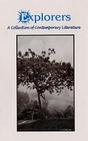
Explorers features some of the best poems by 21st century poets from all over the world. This collection includes the works of hundred poets differing in style and belonging to different nations. The great diversity and range of themes proves the rich wealth of English poetry in the 21st century. In several poems the reader will encounter the plain, unornamental language really used by common man, and this goes straight to the heart. We also notice that many poems in Explorers possess universality revealing more than a temporary or local interest, since great poetry transcends geographical boundaries. The subtle sense of the mysterious and unknown, and an inner joy due to manifestations of Beauty wherever they may be visible helps these poets included in Explorers to get away from the grim pressure of brutal reality. Some of these poets are Imagists reacting against romantic excess, and creating "hard, brilliant, clear effects instead of the soft, dreamy vagueness or the hollow Miltonic rhetoric."
PREFACE
Cyberwit's latest World Poetry Anthology Explorers includes several poets inspired more by sensations than thoughts, and therefore they remind us of Keats' (1795-1821) theory of poetry. In one of his letters, Keats says: "First I think that poetry should surprise by fine excess and not by singularity-it should strike the reader as a wording of his own highest thoughts, and appear almost a remembrance. Second, its touches of Beauty should never be half way, thereby making the reader breathless instead of content: the rise, the progress, the setting of imagery should like the sun, come natural to him, shine over him, and set soberly although in magnificence, leaving him in the luxury of delight."
It is difficult to agree with Byron criticizing Keats-"this miserable self-polluter of human mind". The poems selected for Explorers not only show the influence of Keats' mature poetry like Hyperion and the great odes, but they are also full of both modern and postmodern characteristics. The emphasis in the Romantic poetry was on the poet, but during the Modern era the emphasis is more on the poem itself. T. S.Eliot (1889-1965) says, "We can only say that a poem, in some sense, has its own life; that its parts form something quite different from a body of neatly ordered biographical data; that the feeling, or emotion, or vision, resulting from the poem is something different from the feeling or emotion or vision in the mind of the poet" (The Sacred Wood). After the Second World War, Walt Whitman's impassioned celebration of the individual (Song of Myself) was not enough. During 1950s, the Beat poets, the San Francisco poets, the Black Mountain poets and the New York School of poets gave a new direction to poetry. The slogan of the New York school of poets was: "Try to be the work yourself". The Black Mountain poets were so called, because they lived and wrote together at Black Mountain college in North Carolina. For the Black Mountain artists like Franz Kline, William de Kooning, John Cage, Charles Olson, and several others, 'stripped-down poems' were more important than violent self-pity.
The present anthology Explorers includes a few poems written in an "anti-rules" fashion, a post-modern characteristic asserting "we can never really know anything" (Rosenau). I have avoided the poets influenced by the decadent English authors writing during 1890s. W. B. Yeats aptly says: " The 'Nineties' tried your game And died, there's nothing in it" (Collected Poems, 1950). T. S. Eliot also criticized 'the annual scourge of the Georgian anthology'. My point is that the poets writing in the 21st century cannot and should not write poems which are conformist and complacent. We are living in incredibly gloomy times infected by most vehement memories of two World wars, Afghan and Iraq war, and terrorist attacks creating a spiritual vacuum, therefore it would be highly unrealistic to write now like the Edwardian and Georgian poets in England, because the 19th century Victorian era was full of stability, dogma, stability and complacence. The sentimental 'lisping and vowelled purity' fails to satisfy the modern and post-modern psyche both. A torrent of some of the best poems pouring from the Cyberwit makes it evident that the genius of expression has not disappeared in such blighted and cursed times. There is almost a miraculous renaissance of the poetic talent in the first decade of the 21st century, and an increasingly large number of poems received by me is a conclusive evidence that Poetry has not vanished, whatever its critics might say. "There ought to be an active literature for if its literature be not active, a nation will die at the top" (Ezra Pound, Polite Essays). |

 Items in cart - View Cart