Only $16  


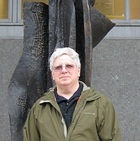
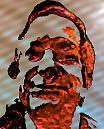
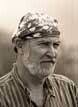
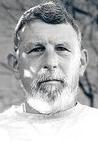
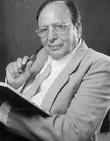
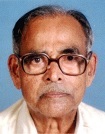
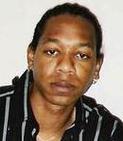
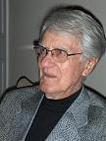
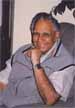
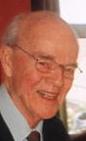
Louie Levy- 2006 age 80

Louie Levy As a Poet  

Louie Levy is preeminently a poet of peace. We find in his poems the beauty of vital and natural affirmations of human nature. Much of Levy’s greatness rests on the verbal beauties and immortal lines ‘ Should all of human dogmatic brain, mind their \ own faith and not of another, most wars will stop and \ not start’ ("Ponder For Peace", Taj Mahal Review, June 2006), ‘reach out with arms outstretched with Love’ ("Human Frailty: UN Reposed"). All his poems are singularly powerful in describing how a person grows or decays; how the blemish of war and naked violence ruins our planet:

inhuman war sacrifices

decent souls for unresolved

political and religious controversies

   ("To Whom War, It May Concern", Taj Mahal Review, Dec 2005, p. 440)

Levy says with distinctive control and poise that only by Love and Peace, and ‘Spiritual Revival’ we can hope to survive. The poet’s energy, passion and power is revealed in the following lines which place him on a par with the best in poetry:

Heart ‘Beat’ we must;

for everlasting Peace

All of Humanity befitting of Love

We inevitably, Will survive

p. 441 

Horace (65 B.C.-8B.C.) aptly commented: "Let your theme be what it may, provided it be simple and uniform; choose a theme suited to your powers, ye authors." Beyond all doubt Levy’s theme sprouts out of his deep instinctive wisdom, which inspires him to say that we should be aware :

Prophet, profiteer, and activist

All are one and the same

    ("Prophets And Predictions", Taj Mahal Review, June 2006, p. 21)

Poetry comes naturally and spontaneously to Louie Levy:

Awaken, plan this day,

like no other, waste not…

Contribute for Peace

Earths pleas

go forsaken… (p. 23)

It is in the poetry of Levy that we notice the skill to lead us towards a new world of Truth and Beauty. Louie Levy has recovered in poetry the almost forgotten splendour of Love and Peace:

Help rescue our planet

Of wars profanity, hate,

And inhuman insanity

             ("Time, To Time", Harvests of New Millennium, 2005, p. 123)

Louie Levy elects to deal with ideas of Peace and Beauty in his poems that are abundantly enchantingly convincing. He doest not adopt a creed, but the essence of his poetry is kindled by eternal values.

              Where happiness steers at its loving helm

              In search of many troubled, drifting spirits

             All lost within saddened storms, in hopes

             of their lonesome rescue

             Having since discovered to have been

             residing within another’s heart, to share

             therein, some heavenly, loving splendour.

("Friendship, Sails on Peaceful Seas", Taj Mahal Review, June 2007, p. 452)

His style is highly rich with overtones of emotion, and secret correspondence of thoughts. This makes his poetry very spontaneous and a living fountain of vitality. Levy’s deepest insights reveal his gentleness and pity for the modern chaos and the sordid reality of the contemporary age. Levy is very right in saying that we should "Urgently preserve and protect our children’s legacy for survival." The poet concludes on a note of warning:

              Earth awaits us no longer for the

              selfishness of all who disgrace and

              pollute of its intolerable, Omnipotent given Immortality

("The Seeding of Love and Peace", Taj Mahal Review, Dec. 2007, p. 452)

If we approach Louie Levy’s poetry with care, we shall often find that the best lines are those in which the feeling or vision aims at altering the present anarchy:

War Is Hell

War Is Profane

War Must Stop !!!

Blasphemous hate will be

of our own evil cast doom.

("Time, To Time", Harvests of New Millennium Journal, 2008, p. 223)

Louie Levy: "All my life ... I’ve wanted to write something special, then, when hurting real bad, tears sneaked from my crying heart, and went filling an empty pen with a helping hand My Brooklyn, NY upbringing eventually had me less tolerant of the cold damp weather. Eventually migrating with my family to So, Ca. in 1975. Currently, I’m still enjoying my sunny home living as a single semi-retired, now independent western dude. Hey! Where have all the cowboys and horses gone? I’ve been writing poetry for seventeen years, since having the insight to discover that...

‘Best friends we can be ‘me and me’,

loneliness was not finding ‘me’,

Focusing on the wonders of photography is another of my special interests.  I’m currently out-reaching for an ageless, kinship camaraderie of poetry/photography oriented individuals to join with in traveling to some proverbial corners of what’s left safe on this Earth. Newly discovered experiences that will further fill these pages with adventure, passion and literary treasures. Please E-mail me having similar interests. My personally favored publisher; writings contained in Cyberwit.net, Explorers, Insights, Taj Mahal Review, Dec.04, June’05, forthcoming, Dec.’05...., Harvests of New Millennium, Art and Poetry. Many years on various forums, e-zines and BBs, Guest spoken for Peace, Love and its creative writing at Simi Valley, Ca Cultural Art Ctr, soon planed at Moorpark Community College, Simi Valley, Ca." E-mail: louielevy@aol.com Web: http://www.cornerpoetry.com/poetry/levy_l/levy.html


 -SANTOSH KUMAR
Editor, Cyberwit.net


Rapture: endings of space and time by Adam Donaldson Powell, Cyberwit.net, India, 2007, pp. 86 $ 15 Paperback, ISBN: 978-81-8253-082-9 

The publication of Adam Donaldson Powell’s Rapture: endings of space and time is remarkable for revealing his varied talents- poems, photography and literary criticism. Powell’s celestial inspiration concentrates itself on transmuting “physicality / into crystalline light” (“Ascension”), his passionate quest for “Great Compassion” will be accomplished only when the whole world experiences “vibration” and listens to the words of the poet. Powell is quite aware of the bitter reality of the contemporary world:

I have sadly learned to expect
the relentless ravages of
war and emotional famine
brought on by the
rider on the red horse,
and the pestilence in the
saddlebags of the black steed. 
“The Fourth Horseman”, p 18

The globalisation of
indiscriminate violence
is multiplied to
the power of the sixes,
and the Antichrist
smiles broadly at
the cancerous spreading
of fear and perdition –
rationalized by armies of
self-proclaimed truth. 
“The Tribulation”, p 19

The modern turbulence and murderous frenzy will surely result in wild agony, if 
“messengers / of love and compassion / no longer dare to / speak out”.

In his poems about Nepal, Powell’s mystical energies or wavebands are inspired by the Buddhist Mantra: “OM VAJRAPAANI HUUM .. OM VAJRAPAANI HUUM ..”. Powell actualizes the transformed soul of goodness faithfully… 

And finally we give birth to the God within .. 
without reservation; and in generous libation.
“At the Buddhist Temple”, p 31

Powell knows very well like Blake that “the ruins of time build mansions in eternity.” His search of utopia takes him to Nepal for mystical exercises of oriental sects.
Such poems transport us as well as the poet to a dreamworld of “vision and hallucination”. They exercise a secret magnetism on our innermost soul extracting from Buddhism its most harmonious and subtle Mantra “Om Mani Padme Hum”. “Buddha Trance” is a vivid comment on the Life in Nepal where the poet finds “The exoticism of spirituality /Blended with indigenous capitalism”.

Powell’s Rapture: endings of space and time also includes most lively, vivid photographs from Nepal, and critical essays on the poetry of Jan Oskar Hansen, Albert Russo and Fernando Rodriguez. Rapture: endings of space and time makes it apparent that Powell has been and is a major writer of this age. 

--Santosh Kumar

Collected Poems and Stories by Adam Donaldson Powell, Cyberwit.net, India, 2005 pp. 175, $15, 81-8253-028-8 

Only $15 

Adam Donaldson Powell’s Collected Poems and Stories contains a number of outstanding poems having "exquisite variety and varied exquisiteness". In this collection, Powell reveals an incomparable craftsmanship proved by his classifying the poems into four different cycles: Poetry Cycle 1 where the poet discovers the Magical Tarot through verse, Poetry Cycle 2 is an admirable and genuine effort of composing short stories through verse, Poetry Cycle 3 is emphatically about the Cretan myths, and in the final Cycle 4 though subtitled "Notes of a Madman", we find no trace of any kind of sensationalism.

Powell’s poem "Adjustment" is very thoughtful and penetrative. The poet is well aware of "The impartial Lords of Karma", and the path of virtue is not a bed of roses:

Over the heads of the righteous

Hovers the pendulous blade of

The Daughter of the Flaming Sword p. 17

"The Hanged Man" is characterized by a spiritual quest:

But he who sublimates

Himself to the Divine Plan

Recycles the elements to the

Accompaniment of Spirit. p. 21


This yearning leads the poet to invoke "Energy of the Divine", and the source of this energy is present only in "the gaseous, primal roots of \ The flaming triangle" ("Suit of Wands"). Powell calls "the wise journeyman" "to heed celestial warnings" ("Suit of Disks"). The poet is in quest of "divine light beamed from \ The eternal flames of the sun" ("The Sun"), "spiritual rebirth", "the eternal vibrations of the Source" ("The Aeon"). He is aspiring "toward that which \ Must be accepted on faith alone" ("Notes of a Madman"). The most notable element in Powell’s poetry is his passion and hunger for eternity.

Even in those poems where he is reconstructing the Cretan myths, we find "the yearning of \ The soul for individual expression" ("Prologue1"). The poet emphasizes that "Treasures of Self-discovery" will be revealed only to the "passionate" souls. Powell’s "pursuit of divine retribution" is based on "faith alone" ("Notes of a Madman" ). The "glimpse of the Unknown" is made possible only by "discovery of self" ("Mirror of Darkness"). There is in Powell the keenest sense of uniting "the Serpent" "with the Regenerative Spirit" ("The Eye of the Triangle"). Powell’s poetry has a marvelous quality of submitting itself persistently and unflinchingly to the "Valley of Soul making".

Powell’s Collected Poems and Stories also includes two wonderful stories of horror-"Useless Occupation" and "What Jonny dug up". The book is dedicated to the memory of Tor Vågli (1949-2004) and the countless Asian tsunami victims of 2004.

--Santosh Kumar


Collected Poems and Stories by Adam Donaldson Powell, Cyberwit.net, India, 2005 pp. 175, $15, 81-8253-028-8 For his Poetry Reading in Argentina (In Spanish by the author himself and translations mostly by Maria Cristina Azcona )

 Only $15 

Powell is a multifaceted creator whose poems are enriched not only by his capability in Literary meanings, but also by his deep sensibility towards human problems, nowadays society illness, joined to his   bright talent for visual arts. He has the privileged neuron that allows him to play with his own sense of aesthetics, as it was a children game. While reading his amusing poetry, we find ourselves observing reality from his point of view.

These poems, from his book “Collected Poems and Stories”, which he is presenting to Argentine public for first time, may be separated in two kinds or groups, to be analyzed and commented. 

The First group is conformed by poems that are similar to a modern, abstract painting,

Like he does in “Green” where a mystery hides under multiple images, colors and concepts. This mystery is revealed at the final verse.  

The second group, which includes among others, The Devil, Before the death of my love, Imagine and The Prudent Cognoscente, presents us, at first sight, techniques coming from Short Story like the abrupt and unexpected ending full of an omnipresent irony. 

In the second reading, both groups present always a philosophical content and customary social criticism which depth leads us to Philosophical thoughts about the meaning of existence

Powell’s work contains ironic humor, sharp criticism, the clear idea and the divertimento of a short story at the same time.

The poem manages, in its mischief, to capture grotesque of this Era, giving to our poetic palate a delicacy more than a simple esthetic pleasure.

The truth in an envelop of surprising originality: art, beauty that is not other thing that authentic poetry.

It remains me of Ezra Pound’s realistic style and, in Spain, Francisco de Quevedo´s conceptual poetry. 

The most beautiful piece, to my understanding, is “The Devil” in which the poet speaks to us, readers, he orders us, he calls our attention, he prevents us of that devil that exists, that is so dangerous sand terrifying.  The poet frightens us with the Devil playing “ To hide and to find” games, petrifying us with its threatening and unknown presence. Creates the climate of fear of a terror story.

In a magisterial synthesis, gives an impressive end when he finally finds that devil in ourselves, shocking us and forcing us to recognize the wickedness that lives and hides in our human heart. 

Here the poet creates a personage, the Devil, that no longer is the famous one but is a real, present phantom, humanized, possible and burning, like the fire of malice in daily life.   

Originality is a constant in Powell’s poems, a surprising and multifaceted artist who amazes us with his music, his paintings, his poems, his humor and always with his genius .He communicates himself in so many ways and he revives in thousands of kaleidoscopic images, that finally he gives himself the final luxury to create a perfect and synthetic pearl of terror, humor, beauty, social critics, universality and creativity in pure state as he does magisterially in the DEVIL.

 --Maria Cristina Azcona


The Golden Wings, An Anthology of WORLD POETRY, pp.320, Price: $25 ISBN 81-901366-1-5 Published by Cyberwit.net (2002)

Only $15 

In an age where Technology universally reigns supreme and former traditions, cultures and, indeed, religions are sadly in decline, our world has become, in effect, little more than a global village. And yet it is a community divided against itself; for warfare, pestilence, famine, terrorist aggression and acute social breakdown have been seen to escalate during recent years, resulting in acute hardship and utter poverty for growing numbers of people while, at the same time, certain privileged individuals and financially motivated syndicates have wilfully and systematically been amassing obscene mountains of wasteful surplus wealth. The world is in one hell of a mess, it would seem, so what on earth are we to do about it?

The answer to this overwhelming problem is surely to be found within the heart of Man, for it is equally true that a loving family is intended to be the very microcosm of the human race as a whole. Poets the world over, despite their differences of ethnic background, religion, culture and historical tradition, are ever ready to bridge those massive chasms that might otherwise have continued to divide the nations; and, as the efforts of thousands of hitherto relatively unknown writers (worldwide) have already shown, Poetry can and will provide this timely and most important link. If this world of ours is still to be 'our oyster', then, surely, Poetry is our pearl - A priceless one, at that.

'THE GOLDEN WINGS' ANTHOLOGY, published last year by CYBERWIT.NET, is not just another collection of poems by a haphazardly assembled conglomerate of international poets. On the contrary, it can clearly be seen to be a well-planned publication, meticulously arranged and edited by a small team of dedicated litterateurs, who have unequivocally extended the hand of friendship, in the true spirit of Peace, across the continents of our beleaguered planet. Dr. Santosh Kumar, Editor-in-Chief, has provided a superb Preface (7 pages in length) which not only gives a scholarly synopsis of the range of poetry styles and content to be observed within this anthology, but also makes extensive cogent reference to many of the featured poets, respectively. Many of the contributing writers live in America, and it matters but little that the majority of the included poets may be relatively unknown to us, for this is indeed a splendid shared celebration in verse.

There are, in all, 215 poets whose work provides a veritable kaleidoscope of tone, colour and breathtaking imagery. Far good measure, this fine composite work is brought to a sparkling close with an assiduously compiled 22 page section providing biographical notes on each of the included writers, thus pinpointing yet another important consideration:

" In the world of Poetry there can be no room for elitism or hierarchical pecking order, of any kind. Poetry is a voice that must be heeded. And this lovely anthology brings to us all a common share of family in the true spirit of international Peace."

--Bernard M.Jackson
Hon. Sec. Cinque Ports Poets - ENGLAND


Branch Redd Review issue 6, Edited & published by Bill Sherman, Branch Redd Books, USA, 2002, pp 80, £5/$10. ISBN 0-9615784-8-3

BRR edited & published by Bill Sherman is one of the most admirable literary Journals. It is marked by genuine autobiographical touches. Sherman has brought to his Journal a wide experience of literature, sincere sympathies, and a rich sense of humour. Sherman is unhappy due to lack of public interest in the English translations of the poetry of Dagny Juel, along with " the deep feminist introduction" by the translator, Norwegian poet Hanne Bramness.

As I came to know that the issue Number 6 would be the last one, I wrote to Sherman that such highly accomplished quality Journals deserved more publications. The Journal is highly informative. For example, we are told about Pound's insistence that the "hyacinth girl" in Eliot's The Waste Land was not Marianne Moore. Besides, BRR has the last four letters Asa Benveniste wrote to Sherman. AB died in 1990; Tom Raworth's obituary appeared in Critical Quarterly (Volume 32 Number 5). The four letters alone are worth the price of the Journal. What is good about the letters is the enormous vitality of relations between Sherman and Asa Benveniste. The inter-relationship illuminates us about Sherman's life, his "health crises", "longstanding hangups with women", and his book Pango Pahngo. The Journal is unusual in presenting rare facts: Hawthorne's daughter, Phoebi Merivale, donated the manuscript of MARBLE FAUN to the British Museum. The Journal contains 2 circular poems by Richard Kostaelanetz, and " Death of the Poet Arthur Rimbaud 1854-91" by Asa Benveniste. The phrase "the blunt economics of murder" indicates that Asa Benveniste is psychologically more penetrating than most of his contemporaries. The content of the Journal is enriched by some of the finest poems of Michael March, Boris Vian, Paul Vans, Patricia Clare Lamb, Jeremy Hilton, Bill Sherman, Frances Presley, C.C. Gilmore, and R. W. Ferrara. Ruwayda Rifka's "The Blue Note" proves that the variety and richness of BRR is quite bewildering.

-SANTOSH KUMAR
Chief Editor, Cyberwit.net


Out of the Ordinary Short Stories by Floriana Hall, Ist Books, USA, 2002, pp. 200, ISBN 1-4033-6026-X
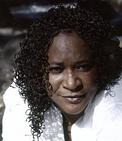

Poe understood very well the significance of "invention, creation, imagination, originality" in fictional literature. We notice these characteristics in nonfiction and fictional short stories by Floriana Hall. The stories depict life in its real complexities, and "convey definite inspirational messages. " The stories are remarkable for their variety. "Of Prayer and Angels" reveals her belief in angels. The story is full of tenderness and pity, as the author illustrates how her faith in God was intensified at the age of seven in the summer of 1934. "The out-of body experience had a definite effect on my life…" "Shaun's Quest" is a children's story, which teaches tolerance.

"One Day Later" is about the horror of the terrorist attack on Sept 11, 2001. The most brutal tragedy perpetrated by the air-borne suicide missions shook the very fabric of culture and human values. Floriana, the versatile author, has also included several of her poems. What emerges from her poem "America Under Attack" is the intensity of feeling at the terrorist attack:

The children are having trouble sleeping,
Families of victims are still weeping,
Nightmares of blasts of fire and ashes
Invading their dreams like whipping lashes.
AMERICA UNDER ATTACK (p.173)

The refrain AMERICA UNDER ATTACK adds to the artistic excellence of the poem. The stirring emotion of the poem is matchless. The stories will "help people cope in similar situations." Floriana says: "In the scheme of things, I am just an ordinary person like everyone else, but I believe I have been inspired to write to help others. " She is an extraordinary painter of life and manners, and there is an inherent moral purpose in most of the stories. Floriana asked herself: "What could I do, other than what I had already done, to help ensure that the world might be a better place for my having walked there? " In her stories there is not a single ungenerous or unkind comment. The stories at every step reflect Floriana's nobility of soul, her charity, her simplicity, and her ceaseless flow of kindliness. Each of the stories in Out of the Ordinary has a moral to convey, but the development of the story is never obstructed by the moral. Hugh Walker aptly points out that in Hawthorne there is a perfect balance- the story is the moral. The same is true about Floriana Hall's extraordinary short stories.

-SANTOSH KUMAR
Chief Editor, Cyberwit.net


Perspectives, by Hirsch Lazaar Silverman, Century House Publisher, Nework, 2002, pp. 52, $ 12.95

Perspectives, Dr. Silverman's collection of poems, represents his aim to penetrate the mystery of the world through the language of poetry. "Life \ Living" reveals some such magnificent lines: "Life is a twisting road \ With unpredictable fork,\ And unexpected tomorrow." Silverman employs imagination to unravel the ways and means to live with 'decency', 'modesty', 'dignity', and 'integrity' ("Excelsior").

Several poems in Perspectives reflect the post-modern quest for moral values. "There Dwells" shows Silverman at his best: "There dwells inside the flame \ Of our prayer a flaming source \ Which may ignite in one a wonder \ Of wonders. " Silverman has aptly propounded the value of 'prayer' arising out of the innermost soul which can save us from endless 'dialectic' so that one may "return home eternally \ In harmonious sacredness." The predominant quality of Perspectives is Silverman's sense of 'sacrednes' and 'obedience' to higher law. The things which most impress him are " humility" and "insight", since life is "significant" ("Logic"). The poet's whole message and philosophy is based on a delicate sensibility inspired by the infinite values and Kant's 'categorical imperative'. "Echoes of Eternity" defines 'the good life' as "An extraordinary harmony \ Created between tradition \ And progress." The poem is full of the poet's simple earnestness. Several poems in Perspectives are confessions or prayers: "For I have erred \ Not out of love of sin;\ I am most guilty\ Out of human weakness. " "Reality" pleads for "full life" instead of "long life." In another sublime poem "Pledge" the poet emphasizes "the power of prayer", "ethical values", "human decencies", "human fulfillment", and "ultimate creativity." Silverman's poetry is marked by a delicate and subtle didactic vein in a language that is simple and natural.

Silverman, author of 21 books including ten volumes of poetry, in his Perspectives has raised the question 'how to live', and the question has been resolved by each poem itself. The poems have "high seriousness" and "the weight of meaning." Silverman's morality, the result of the simple lucidity of his mind, enlightens and ennobles human life. "Grand style arises in poetry when a noble nature, poetically gifted, treats with simplicity or severity a serious subject." (Matthew Arnold) Silverman is the master of "grand style."

-SANTOSH KUMAR
Chief Editor, Cyberwit.net


The Still Horizon, An Anthology of WORLD POETRY, pp. 246, Price: $25, ISBN 81-901366-0-7 Published by Cyberwit.net (2002)

Only $10 


The book provides a comprehensive collection of poems by the poets all over the world. Here is a wonderful gallery of the poems by eminent poets from countries like USA, UK, Canada, Netherlands, Australia, Italy, Argentina, Spain, France, Portugal, Japan, India etc. The anthology possesses a breadth, a depth, and a searching wisdom which is rare and admirable both. The function of this book is to prepare a congenial atmosphere for the poets, an atmosphere of best ideas. Most of the poems are penetrated with sentiment and intellectualism. Few poets in the anthology deal with sensations rather than ideas, with concrete life than with abstract imaginings. The poets are neither escapists nor unconcerned with human affairs.

Daniel W. Gonzales' 'Grandfather', Paul Oscar Deene Karr's 'Coffee Sweet', Cynthia Therese Hoffman's 'Nature's Enchantment!', Hilary Lois Gnali's 'The Snow Queen', Rune Leknes' 'The Mask', Yvonne Sparkes' 'Summer's Rain', 'My Prayer' and 'My Church', Christine Kempster's 'God Made Me', Sharon W. Flynn's 'Desert Dawn' and 'A Bouquet For New York', Jan Oskar Hansen's 'An Unconventional Mother', 'Rebirth & Cloning' and 'Stormy Weather', Jim Richardson's 'Ghosts In Korea' and 'Golden Age', Kimberly DuBoise's 'The Awakening', , Kathleen K. Harris' 'Evening Contemplation' and Floriana Hall's 'Wedding In A Rose Garden'- all these poems are magnificent and extend the domain of sensibility for the delight, honour and benefit of human nature.

Joseph Aprile's 'Dark Green Dripping Wetness….' is characterised by accuracy of observation and bitter truthfulness of representation:

I am my mother's fetus,
left nine months soaking
in a slimy sac of brine,
I find myself, sometimes
longing for the cleansing drench of downpour
to smooth the cracks and
fill the fissures
left from the naked heat of birth.

Felix Fojas as a poet is simple, healthy, natural-no hysterics or bluefire. His poem "On Moving Mountains" opens with the following words, inspired by everyday speech, yet charged with meaning:

In my callow days
I spent all my time
Moving mountains,
But nine out of ten
I miserably failed.

The above lines are brilliant and dazzling. There is an indescribable magnetism about his poems. The intent of Kim Shea's "Will You Still Love Me" is to arouse the reader to a world of true love. The poet asks:

Will you still love me thou my face has changed?
with wrinkles and lines often caused by age,
and my eyes have lost their youthful light
will you still love me through day and night?

These lines have the strongest emotional tones. Cassandra Lee Wernecke's "A Waste Of Love", in which the poet recounts a "hard' struggle "to keep this bliss", concludes with a powerful paradox:

but if I'm afraid to try
just one more time
this thing so sublime
is just a waste.

Shirley Bolstok's "May The American Flag Stand" refers to the events of black Tuesday, September11, 2001. The poem persistently and fervently attempts to bring home the complete devastation as the towers "came down in a thundering crash." Each line of the poem is a complete unit of the meaning signifying the tragedy.

"Not A Word Is Spoken" by Richard Brents is aimed at expressing the feeling that the poet is perhaps "alone", and nature itself seeks to assert this idea:

Not a sound
Bird nor breeze
Could it be that I'm alone?

Melodye Johnson's "You Will" moves from one picture of mood to a second, third and fourth. The lines of the poem are divided by questions:

Who's going to love me for the rest of my life...
Who will take me for his wife?
Who will calm me when I feel afraid...
Who'll share the dreams and plans I've made?

Dr. Hirsch L. Silverman's "Polarity" shows high poetic gifts. He is quite right when he says:

That without sharing
There can be no justice;
That without justice,
There can be no peace;
That without peace,
There can be no future.
There are many such cosmic images in his poem "Trinity' also.

"Homeless" by Norma Woodbridge creates images of the war, reflecting precisely the poet's passion for peace. The melodious quality of the line "we are not home" flows from the rhyme-like repetitions.

The publication of World poetry anthology presents sales problems and is not a profitable business at all. Besides, the production expenses are continually swelling. It is, therefore, truly remarkable that Cyberwit has offered its best efforts by compiling poems from different nations of the world in a single volume. This proves that the Cyberwit is devoted to the cause of poetry. Publishers usually do not care to take the risk of publishing poems but the poets deserve an audience. Due to venturing upon a hazardous business, Cyberwit should be admired by the whole creative community, because the poets look in vain for a publisher. The publishers generally turn down poetry publication.


Copyright © 2001-2008, Cyberwit.net, All Rights Reserved